

BUCHAREST – The CMR Convention, which provides the legal framework for international road freight transport, is marking its 70th anniversary. Although approximately 280 million international transport operations are carried out under the CMR Convention each year, electronic consignment notes (eCMR) are used in less than 1% of these operations. According to the International Road Transport Union (IRU), the industry must accelerate the transition to digital documentation.
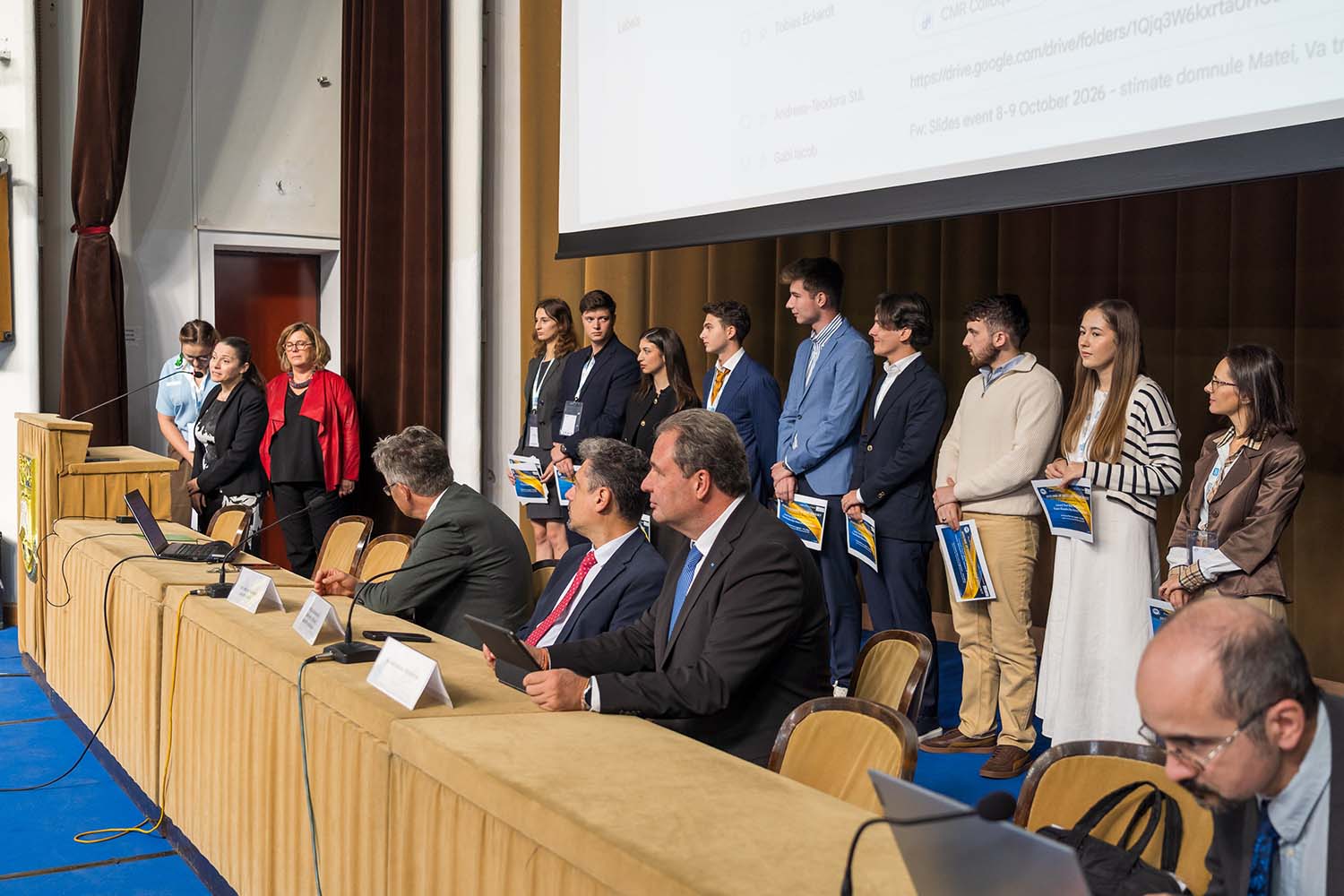
Legal experts, academics and transport industry representatives gathered in Bucharest for the International CMR Colloquium to discuss the convention’s 70-year history and its future in an increasingly digital transport sector.
The event was hosted by the University of Bucharest and the CMR Advisory Council, with support from IRU and the Romanian road transport association UNTRR.
IRU President Radu Dinescu stressed that small and medium-sized transport operators must remain at the centre of the digital transition.
70 years of legal certainty for international road freight
The CMR Convention was established in Geneva in 1956.
Before its introduction, international road transport operators had to navigate different national legal systems governing carriers, consignors and consignees, often within a single cross-border journey.
The convention introduced a common legal framework covering transport contracts, consignment notes, liability, claims and jurisdiction.
Today, 58 countries across Europe, North Africa, the Middle East and Asia are contracting parties to the convention.
“CMR is a convention that our operators and their customers rely on every single day,” said IRU President Radu Dinescu. “This is a clear sign that the convention works.”
According to Dinescu, the convention allows transport operators to move goods across multiple borders with greater legal certainty.
Customers also benefit from clear rules determining responsibility when something goes wrong during transport.
The Bucharest discussions also addressed the interpretation of the convention by courts in different countries.
Case law from Romania, Bulgaria, Montenegro, Moldova and the Czech Republic was among the subjects examined.
“A convention only stays alive if the legal interpretation is consistent,” Dinescu said.
Electronic consignment notes remain underused
While the paper CMR consignment note has been a cornerstone of international road transport for decades, the transition to its electronic equivalent remains slow.
The electronic consignment note has the same legal standing as its paper counterpart and can help reduce administrative costs, accelerate invoicing and provide real-time information about transport operations.
However, eCMR currently accounts for less than 1% of the approximately 280 million international CMR transport operations carried out annually.
Dinescu described this gap as both a challenge and an opportunity.
“We now need to move from ratification to implementation. From law to market,” he said.
43 countries have joined the eCMR protocol
The number of countries joining the additional protocol for electronic consignment notes continues to grow.
A total of 43 countries have now joined the eCMR protocol. Albania, Montenegro, North Macedonia and Serbia became parties in 2026 alone.
According to IRU, every country sharing a land border with Romania is now part of the eCMR framework.
Dinescu highlighted the importance of this development for international road freight corridors.
“A road freight corridor works only if the legal framework is in place on both sides of the border,” he said.
Different digital platforms must work together
IRU stressed that joining the eCMR protocol does not automatically result in widespread practical adoption.
One of the main challenges is ensuring that different electronic consignment note platforms can exchange information seamlessly.
Transport companies using software from different providers must be able to share electronic documents without technical barriers.
Authorities must also recognise and process electronic transport information consistently across borders.
IRU is addressing these issues through its eCMR Technical Expert Group, which brings together technology providers and transport industry stakeholders.
The objective is to ensure that companies can exchange eCMR data regardless of which digital platform they use.
Affordable solutions for smaller transport operators
According to IRU President Dinescu, the digital transition must not become a process that only large international transport companies can afford.
Most road transport operators are small and medium-sized businesses, making affordability and ease of use essential.
“The vast majority of operators are small and medium-sized companies,” Dinescu said. “Solutions have to be simple and affordable.”
IRU believes the future success of eCMR will depend not only on legislation and technological development, but also on whether transport companies can use these systems efficiently in everyday operations.
Seventy years after the introduction of the CMR Convention, international road freight transport faces another major transition: moving from predominantly paper-based consignment notes towards digital documentation that works across national borders and between different technology platforms.



